Customers, contractors, and public sector buyers are now routinely requiring verified carbon data from their suppliers. For manufacturers, this is no longer a corporate responsibility exercise, it is a condition of trade. Organisations that cannot provide credible emissions data at product, site, or organisational level are increasingly excluded from tenders, frameworks, and supply chain shortlists.
The manufacturers that act early secure a measurable commercial advantage. Those that delay, may face rising compliance costs, lost contracts, and diminishing credibility with their buyers.
Despite the volatile global economy and difficult trading conditions manufacturers need to act now, understand the drivers for change and take positive steps to understand the actions they need to take and where to get specialist support.
The regulatory landscape for UK manufacturers is tightening from multiple directions.
The Carbon Border Adjustment Mechanism (CBAM) is one of the most significant recent developments. Both the EU and UK are introducing CBAM frameworks that will require manufacturers to report, and ultimately pay for, the embedded carbon in traded goods.
Manufacturers who cannot quantify the carbon intensity of their products will find themselves at a commercial disadvantage in both domestic and export markets.
In addition, several established and emerging frameworks are shaping procurement decisions across the sector:
For manufacturers, these are important compliance requirements. They determine which tenders you can bid for, which supply chains you remain part of, and how your products are assessed against competitors.
Manufacturing operations present carbon management challenges that generic sustainability advice does not address.
Process complexity is the first challenge. A single site may run numerous machines at different durations, with variable energy demands and overlapping process flows as their product or service progresses through the business process.Mapping emissions accurately across these operations requires in depth understanding, as well as robust accounting methodology.
Energy intensity compounds the problem. Manufacturing sites are often significant consumers of gas and electricity, with energy costs already one of the largest operational expenses. Understanding where energy is being wasted, and where it is genuinely needed, requires detailed, site-specific analysis.
Supply chain emissions add a further layer of complexity, and often the largest one. For many manufacturers, purchased raw materials represent the dominant share of their total carbon footprint, in some cases more than 80 per cent of all emissions. Yet these Scope 3 categories are the hardest to measure and the most frequently overlooked.
Finally, there is the data gap itself. Many manufacturers know their total energy spend but cannot attribute emissions to individual products, processes, or sites with the specificity that customers and regulators now expect. Generic emissions factors from databases can significantly overstate or misrepresent actual performance, which can undermine both reporting accuracy and commercial positioning.
The commercial consequences of poor carbon data are becoming quantifiable.
As CBAM takes effect, manufacturers who trade with or compete against EU suppliers will need to prove the carbon intensity of their products with verified data. Without it, they risk losing contracts to competitors who can.
Conversely, manufacturers with verified carbon data, credible reduction plans, and product-level LCA results consistently report stronger positioning in competitive tenders, improved relationships with procurement teams, and earlier sight of framework opportunities.
Manufacturers navigating this landscape need practical, commercially relevant carbon support.
The specific requirements vary by size, sub-sector, and supply chain position, but typically include:
Manufacturers need a carbon management approach that integrates with commercial decision-making, strengthens their market position, and evolves as regulatory requirements develop.
Carbon Sense works directly with manufacturing operations to deliver the carbon data, plans, and strategic support that procurement teams, contractors, and regulators require.
Two recent projects illustrate the approach.
Kernow Coatings Ltd — Carbon Reduction Planning
Kernow Coatings is a Cornwall-based manufacturer of advanced coating technologies. The company had strong environmental credentials, including water-based coatings, zero waste to landfill, and on-site solar generation, but lacked a formal, data-led carbon management framework.
Carbon Sense measured emissions across Scopes 1, 2, and key Scope 3 categories using GHG Protocol methodology. The assessment revealed that Scope 3, particularly raw materials, accounted for more than 80 per cent of the total footprint.
This insight shifted the focus from energy efficiency alone to targeted supplier engagement and procurement strategy. The resulting board-approved Carbon Reduction Plan includes a verified baseline, costed reduction actions, and a commitment to at least a 50 per cent reduction by 2030.
Brookland Sand & Aggregates — Life Cycle Assessment
Brookland Sand & Aggregates produce granite aggregates and sands for construction and infrastructure clients in Cornwall. Their customers increasingly required product-level emissions data to complete their own Scope 3 reporting, and generic database factors were not sufficient.
Carbon Sense conducted a site visit, mapped the operational process, and completed a cradle-to-gate Life Cycle Assessment producing verified CO₂e per tonne data for each processed material. Brookland can now provide accurate, product-specific emissions figures to contractors, strengthening their position in competitive tenders.
Manufacturers who work with Carbon Sense typically gain:
Carbon Sense's methodology is built around three principles that matter to manufacturers.
First, operational understanding.
Every engagement begins with a thorough assessment of how the business actually operates, including the machines, the processes, the energy flows, and the supply chain structure.
Second, commercial relevance.
Every output is designed to be applied, whether that's supporting a tender submission, satisfying a procurement requirement, informing a board decision, or giving your customers the data they need.
Third, a right-sized approach.
An SME aggregate producer and a multi-site advanced manufacturer have different needs, different budgets, and different levels of internal resources. Carbon Sense keeps the methodology consistent but shapes the scale and delivery to fit.
Carbon Sense has worked with manufacturing organisations ranging from single-site processors to multi-site advanced manufacturers, delivering carbon footprints, Life Cycle Assessments, reduction plans, and compliance submissions.
The approach in each case has been consistent: start with accurate data, understand the operation, identify material emissions sources, and build outputs that are both technically defensible and commercially useful.
Carbon Sense is a consultancy, not a software platform. You work directly with experienced specialists who understand manufacturing operations, UK regulatory requirements, and what procurement teams actually need to see.
For manufacturers preparing for CBAM, formalising carbon management, or responding to supply chain disclosure requirements, Carbon Sense provides the expertise, the methodology, and the practical delivery to get it done properly.
"Carbon Sense worked with us over a six-month programme covering carbon footprinting, offsetting, reduction planning and energy management. Their team were consistently responsive, knowledgeable and clear, providing a structured and credible approach to measuring and managing our emissions. The process was well explained from the outset, with transparent fees and practical guidance throughout. As a result, we now have greater clarity over our carbon impact and a robust plan in place to manage it effectively. We would confidently recommend Carbon Sense to any organisation seeking professional, procurement-ready sustainability support that delivers real value." - Kernow Coatings Ltd
Q1. Why does a manufacturing business need carbon accounting?
Customers, contractors, OEMs, and procurement platforms such as JOSCAR and EcoVadis increasingly expect manufacturers to provide verified emissions data across production, energy use, materials, and supply chains. Carbon accounting provides a clear baseline, identifies where emissions are concentrated, and creates the metrics needed to prioritise action, demonstrate progress, and respond credibly to both commercial and regulatory requirements.
Q2. How can Carbon Sense help manufacturers meet SECR, ESOS, and emerging UK Sustainability Reporting Standards?
Carbon Sense builds a structured emissions baseline covering Scopes 1, 2, and relevant Scope 3 categories, establishes repeatable data collection processes, and produces robust figures and narrative suitable for SECR, ESOS, customer disclosures, and investor reporting. The approach also prepares manufacturers for UK SRS and ISSB-aligned reporting as these standards are adopted, including support for science-based targets where appropriate.
Q3. Can Carbon Sense provide product carbon footprints, LCAs, and EPDs for manufacturers?
Yes. Carbon Sense translates production and supply chain data into credible product-level carbon information — including product carbon footprints, cradle-to-gate Life Cycle Assessments, and support for Environmental Product Declarations where required. This enables manufacturers to respond confidently to OEM requirements, customer sustainability questionnaires, and procurement specifications for embodied carbon data.
Q4. How does carbon management help manufacturers prepare for CBAM?
Both the EU and UK are introducing Carbon Border Adjustment Mechanisms that will require manufacturers to report and ultimately pay for the embedded carbon in traded goods. Manufacturers with verified product-level carbon data are better positioned to meet these requirements as they take effect. Carbon Sense helps manufacturers build the data foundations now — through carbon footprinting, LCA, and supply chain analysis — so they are prepared rather than reactive.
Q5. What does a typical engagement look like for a manufacturing client?
Every engagement starts with a site visit and a thorough assessment of how the business operates. From there, Carbon Sense agrees priorities and targets, then delivers the plans, data, and narrative needed for reporting, procurement, customer requirements, and internal decision-making. The methodology is consistent; the scale and delivery are shaped to fit the organisation. Optional training is available to embed carbon management capability in-house.
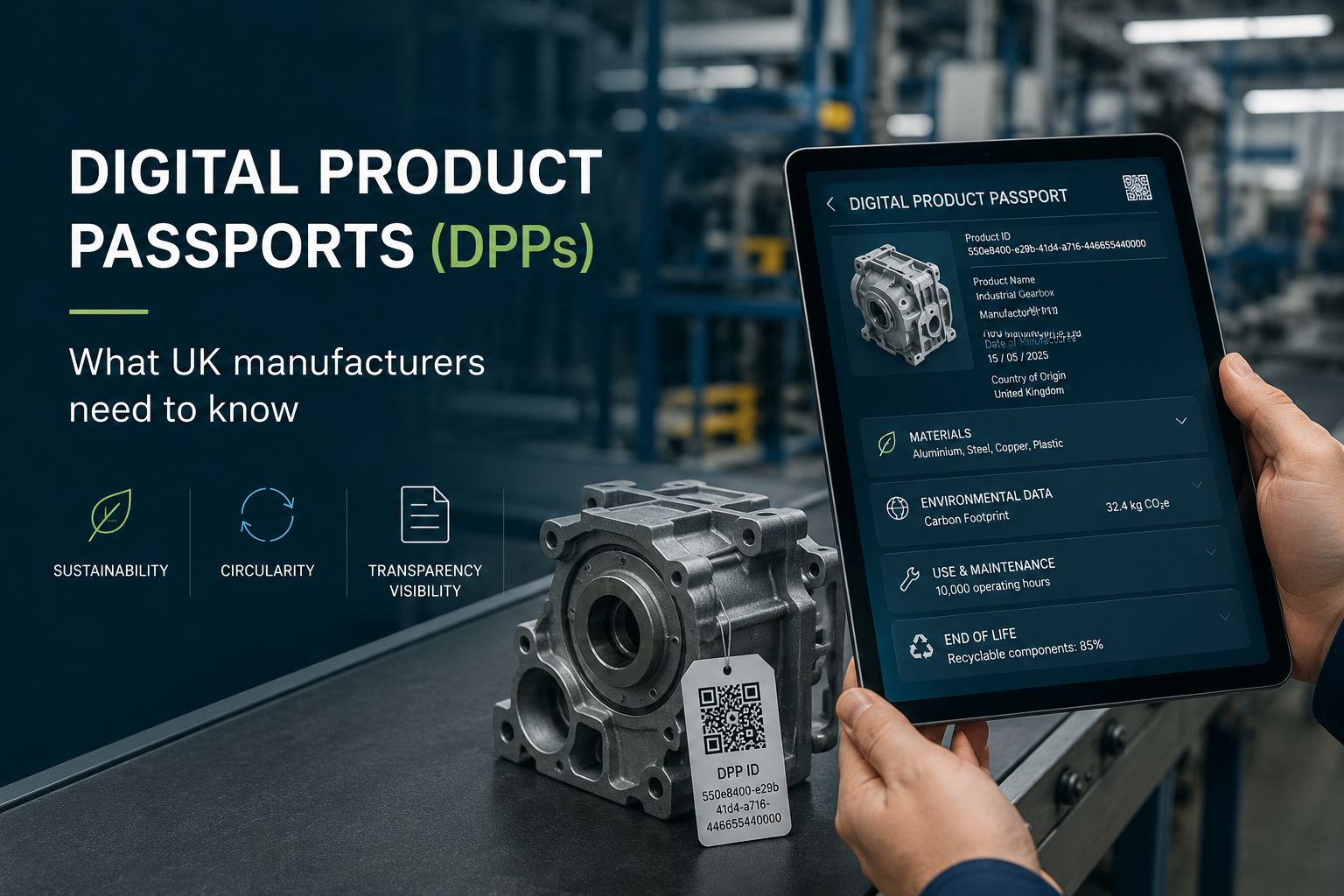
Digital Product Passports (DPPs) are set to change how manufacturers collect, manage and share product information. This article explains what DPPs mean for UK manufacturers supplying the EU, key implementation dates and how Product Carbon Footprints, Life Cycle Assessments and reliable supply chain data can help businesses prepare.

Across the UK, organisations are putting off their carbon footprint work. Budget pressure, competing priorities, and uncertainty about what the process involves are all cited as reasons. For many, it feels like something that can wait until conditions improve.

The UK care sector is a large and diverse part of the healthcare system, with around 15,000 residential and nursing care homes, alongside thousands of community healthcare providers, dental practices and domiciliary care services operating across the country.
UK manufacturing accounts for approximately 11 per cent of the country's total greenhouse gas emissions. From energy-intensive processing to complex multi-material supply chains, the sector faces a carbon management challenge that is both operationally complex, and commercially urgent.
Over the next 12–24 months, the introduction of Carbon Border Adjustment Mechanisms (CBAM) across the EU and UK will fundamentally change how emissions are accounted for in international trade.

Many organisations assume that bringing a new supplier into their supply chain will automatically increase their carbon footprint. In practice, however, the opposite can sometimes be true. The right supplier, with more efficient processes, better environmental performance or lower-carbon products and services, can actually help reduce emissions across your wider value chain.

Organisations receiving Cornwall’s Good Growth or Shared Prosperity Fund support may now need Environmental Growth Action Plans or Carbon Reduction Plans. Learn what this means and how businesses can respond.
Many organisations supplying the NHS are discovering that robust carbon reporting is becoming a core requirement for future contracts. The key is to start early - measure emissions properly, build a credible reduction plan, and ensure reporting is clear and transparent.

A climate action plan is typically more comprehensive and strategic. It goes beyond compliance to include long-term decarbonisation pathways, stakeholder accountability, and integration into corporate governance.

The Carbon Sense team had the pleasure of attending the Cornwall and Isles of Scilly Sustainability Awards, and were honoured to sponsor two categories in 2025, Low Carbon Leader and Most Sustainable Organisation, and to present the trophies to three outstanding winners.

Nature-based solutions are increasingly being used by organisations to address carbon emissions. When applied carefully, they can play a meaningful role in a credible, reduction-led Net Zero strategy, particularly where unavoidable and residual emissions remain.
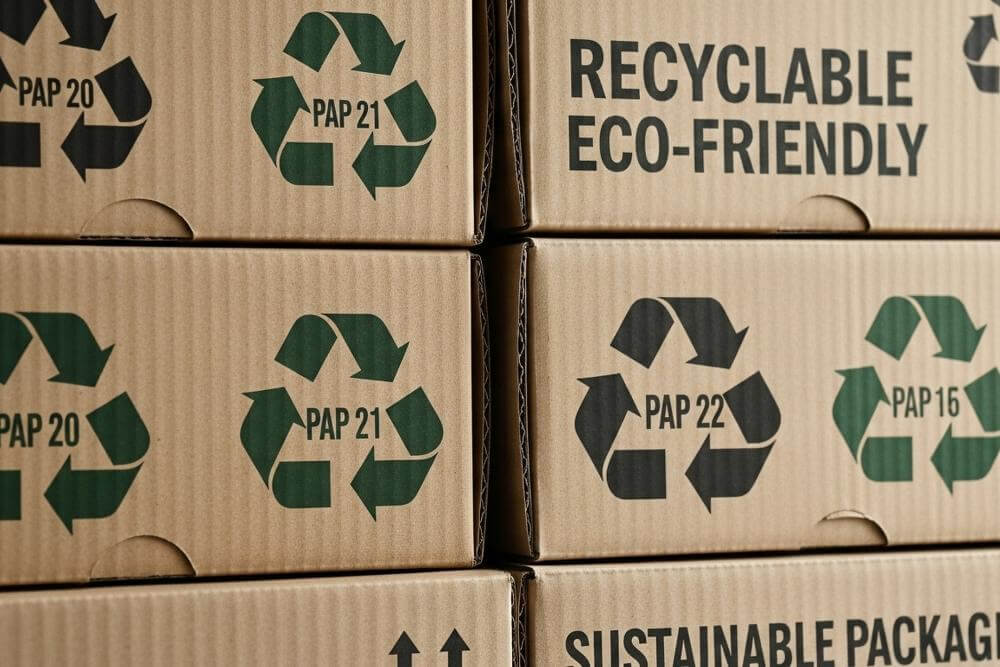
Developing an EPD can ensure you meet tender requirements, as well as providing an opportunity to understand and reduce the true environmental impact of your products.

Understanding the Transition from SECR to UK SRS. The UK government is replacing the current Streamlined Energy and Carbon Reporting (SECR) framework with the more comprehensive UK Sustainability Reporting Standards (UK SRS).

As part of its Net Zero Supplier Roadmap, the NHS has announced that by April 2027, all suppliers, including those providing food, medical products, and services, will be required to submit a comprehensive Carbon Reduction Plan (CRP).

Carbon Sense is your expert partner in carbon reduction. We support UK organisations to understand, measure, and reduce their carbon footprint, save energy, and make sense of sustainability. With a practical, no-nonsense approach, we help you achieve Net Zero goals while protecting your bottom line.

"We are excited to support the awards this year and are honoured to sponsor the Carbon Positive category. At this crucial time, carbon mitigation and an embedded strategy to achieve Net Zero are vital to avoid further climate change catastrophes".

In a world increasingly focused on sustainability, Carbon Literacy has emerged as an essential tool for businesses seeking to reduce their environmental impact. Carbon Sense understands the value and benefits of Carbon Literacy Training whether for a team within your business, or for your entire organisation.

A carbon reduction or decarbonisation plan is a set of strategies and actions that an organisation, community, or government implements to reduce its carbon footprint and mitigate the effects of climate change.

Carbon credits, and their differences, is a frequent topic of discussion. When developing a sustainability strategy or communicating about sustainability, its essential for businesses to understand these differences

Pathway to Net Zero, launched in November 2023 is a fully funded support programme helping businesses adopt more environmentally conscious processes and move towards becoming Net Zero.

The future still remains uncertain so considering options to reduce energy consumption to rely less on the grid is becoming more and more necessary.

Climate change has become a key issue for us all. With scientific reports being released every day, we now know more about the changes that are happening to the Earth’s systems.

The impact of the industrial revolution has created a climate where pretty much all our activities have an impact on the environment.

By reducing your organisation’s carbon footprint you can reduce your impact on the environment and resources.

There is a wealth of research being undertaken by the leading academics studying climate change and assessing how we can build climate resilience and reduce risk.

It is important to get good advice to ensure that you avoid the common pitfalls and have a plan that works for you and achieves genuine environmental benefits.