The UK care sector operates approximately 15,000 residential and nursing care homes alongside thousands of community healthcare providers, dental practices, and domiciliary care services. These are energy-intensive, 24-hour operations. Heating, hot water, catering, laundry, lighting, and clinical support systems run continuously, generating emissions across Scopes 1, 2, and 3 that most providers have never formally measured.
The sector's primary commissioners, the NHS and local authorities, are tightening sustainability expectations across their supply chains. Care providers that cannot demonstrate a credible carbon footprint and a compliant Carbon Reduction Plan are increasingly at a disadvantage in procurement, commissioning, and framework evaluations.
The organisations that act now will be better positioned commercially. Those that wait may risk rising costs, lost contracts, and diminishing credibility with the commissioners and funders they depend on.
The regulatory and procurement landscape for care providers is shifting in several directions.
The most immediate pressure comes from NHS procurement. From 6 April 2026, NHS Supply Chain requires all suppliers submitting tenders to have achieved Evergreen Level 1 at the point of tender close. This means publishing a PPN 006 compliant Carbon Reduction Plan, reporting emissions across Scope 1, Scope 2, and relevant/subset Scope 3 categories, and demonstrating a formal commitment to Net Zero by 2050.
This requirement sits within the NHS's wider "Five Supplier Asks", which also cover Social Value, Horizon Scanning, and Modern Slavery Prevention. For care providers linked to NHS commissioning, Evergreen compliance is becoming a condition of doing business.
Beyond the NHS, several additional frameworks are shaping the landscape.
As a care provider, these policy developments determine which tenders you can bid for, how commissioners assess your organisation, and how resilient your operating model is to rising energy costs.
Care operations present carbon management challenges that generic sustainability advice does not address.
The most important is operational intensity. Care homes and nursing facilities run 24 hours a day, 365 days a year. Heating, hot water, catering, laundry, and lighting cannot simply be switched off or reduced without affecting the quality of care. Any reduction strategy must work within the non-negotiable requirements of resident welfare and clinical safety.
Energy costs compound the problem. Care providers may be on poor energy contracts, paying significantly more than they need to for gas and electricity. With energy often representing one of the largest operational costs after staffing, the difference between a well-managed energy procurement strategy and an inherited default tariff can run to tens of thousands of pounds per year across a multi-site portfolio.
Supply chain emissions add a further layer of complexity. Food, medical consumables, PPE, laundry services, clinical waste disposal, and building maintenance all contribute to Scope 3 emissions. For many care providers, these categories represent the majority of their total carbon footprint, yet they are the least visible and the most difficult to quantify.
Finally, there is the capacity gap. Most care organisations do not have in-house sustainability expertise, and operational teams are focused on care delivery. The burden of collecting energy data, understanding emissions categories, and producing compliant reports is significant for organisations already stretched by staffing pressures and regulatory demands.
Care providers unable to demonstrate Evergreen Level 1 compliance by April 2026 risk exclusion from NHS Supply Chain tenders. For organisations where NHS and local authority commissioning represents a significant share of revenue, this is a material business risk.
Energy costs across multi-site care portfolios are often running higher than necessary. Providers on poorly negotiated or default energy tariffs are typically overpaying by a significant margin. Across a portfolio of even three to five homes, the cumulative impact runs to tens of thousands of pounds annually, money that could be redirected to care delivery, staffing, or capital improvements.
Over 60 per cent of the NHS carbon footprint comes from its supply chain, and 98 per cent of NHS Supply Chain emissions are generated by suppliers. The direction of travel is clear: commissioners will increasingly expect care providers to demonstrate measurable progress on emissions, not just a statement of intent.
Care providers navigating this landscape need practical, commercially relevant support that reflects the realities of running care operations. The specific requirements vary by size, funding model, and commissioning relationships, but typically include:
Care providers need a carbon management approach that works around the demands of care delivery.
Carbon Sense works directly with care providers to deliver the carbon data, energy savings, compliance outputs, and practical advisory support that commissioners, procurement teams, and boards require.
Carbon Footprinting and Energy Strategy
A group of nursing and residential care homes in the South West, providing specialist dementia, nursing, respite, and end-of-life care, engaged Carbon Sense to establish a structured carbon footprint across its multi-site portfolio. The scope covers Scopes 1, 2, and priority Scope 3 categories using GHG Protocol methodology, with activity-based analysis of major procurement categories including food, PPE, medical consumables, laundry services, and waste contractors. Outputs are structured for NHS Evergreen and PPN 006 compliance, with data capture templates designed to support future annual reporting in-house.
Care providers who work with Carbon Sense typically gain:
Carbon Sense's methodology is built around three principles that matter to care providers.
First, operational understanding.
Every engagement begins with a thorough assessment of how the organisation actually operates, the buildings, the energy systems, the procurement patterns, and the staffing model. Reduction strategies must work within the non-negotiable requirements of care delivery.
Second, commercial relevance.
Every output is designed to be applied, whether that is supporting an NHS Evergreen submission, informing a board decision on energy investment, or securing a better energy tariff. Carbon data only has value when it informs action.
Third, a right-sized approach.
A single care home and a multi-site portfolio have different needs, different budgets, and different levels of internal resources. Carbon Sense keeps the methodology consistent but shapes the scale and delivery to fit.
Carbon Sense has worked with care providers ranging from community healthcare social enterprises to multi-site residential and nursing care groups, delivering carbon footprints, Carbon Reduction Plans, energy procurement support, and compliance submissions under PPN 006 and NHS Evergreen.
The approach in each case has been consistent: start with accurate data, understand the operation, identify material emissions sources, and build outputs that are both technically defensible and commercially useful.
Carbon Sense is a consultancy, not a software platform. You work directly with experienced specialists who understand care sector operations, NHS procurement requirements, and what commissioning teams actually need to see.
We worked with Carbon Sense on our carbon footprint and carbon reduction plan and couldn’t be happier with the support. As a busy dental practice under a lot of pressure, it was hugely reassuring to have everything made clear, concise and easy to understand, particularly around PPN requirements. The team were extremely helpful throughout and genuinely made the whole process feel straightforward. The work exceeded our expectations and we’d be happy to recommend Carbon Sense to anyone looking for clear, compliant and supportive sustainability guidance - Holly
If your organisation is reviewing its carbon reporting requirements, preparing for NHS Evergreen, or looking to reduce energy costs across your care portfolio, we would welcome the opportunity to discuss how we can help.
Contact Carbon Sense for a no-obligation conversation about your reporting needs and next steps.
What is the NHS Evergreen Sustainable Supplier Assessment and how does it affect care providers?
The Evergreen Assessment is NHS England's framework for evaluating supplier sustainability. From 6 April 2026, all suppliers submitting tenders through NHS Supply Chain must have achieved Evergreen Level 1, which requires a PPN 006 compliant Carbon Reduction Plan, emissions reporting across Scopes 1, 2, and 3, and a formal Net Zero commitment. Providers that cannot meet this standard risk exclusion from future procurement.
Do care homes need a Carbon Reduction Plan?
Care providers supplying services through NHS or local authority contracts are increasingly expected to hold a compliant Carbon Reduction Plan. PPN 006 applies to suppliers bidding for government contracts above £5 million per annum, and NHS Evergreen Level 1 extends this expectation across the supply chain. Commissioners are also beginning to assess sustainability credentials as part of broader quality evaluations.
What are the biggest sources of carbon emissions in the care sector?
Gas-fired heating and hot water systems are the primary Scope 1 source. Electricity for lighting, catering, laundry, and medical systems drives Scope 2. Scope 3 — often the largest share — covers food procurement, clinical consumables, PPE, waste disposal, building maintenance, and staff travel. The 24-hour operational nature of care homes means energy consumption is structurally higher than most comparable property types.
How can care providers reduce energy costs across multiple sites?
Energy procurement is one of the most significant opportunities. Many providers are on inherited or default tariffs, and a structured procurement process can save tens of thousands of pounds annually across a multi-site portfolio. Practical measures include heating controls, LED lighting, insulation improvements, and smart metering — all designed around the requirement to maintain resident comfort and clinical safety.
How can Carbon Sense help care providers meet NHS sustainability requirements?
Carbon Sense measures emissions across Scopes 1, 2, and 3, develops PPN 006 compliant Carbon Reduction Plans, prepares organisations for NHS Evergreen Level 1, and implements energy procurement strategies that reduce costs across multi-site portfolios. The approach is tailored to care environments, with sector-relevant intensity metrics and data capture templates that support ongoing annual reporting without requiring in-house sustainability expertise.
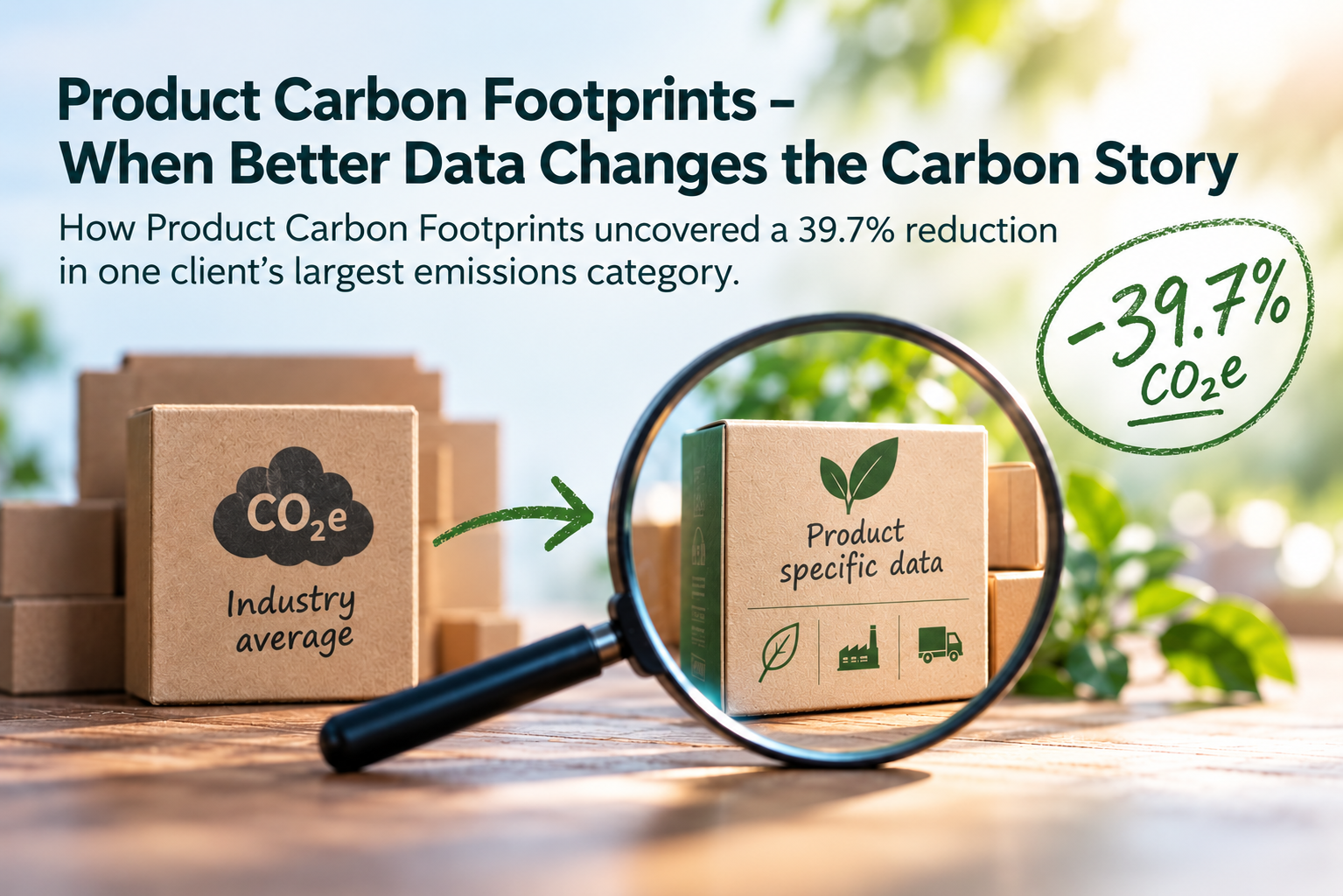
A Product Carbon Footprint can change more than a number. It can change how an organisation understands its emissions, sets its targets and makes purchasing decisions, replacing assumptions with evidence and creating a stronger foundation for genuine carbon reduction.

Digital Product Passports (DPPs) are set to change how manufacturers collect, manage and share product information. This article explains what DPPs mean for UK manufacturers supplying the EU, key implementation dates and how Product Carbon Footprints, Life Cycle Assessments and reliable supply chain data can help businesses prepare.

Across the UK, organisations are putting off their carbon footprint work. Budget pressure, competing priorities, and uncertainty about what the process involves are all cited as reasons. For many, it feels like something that can wait until conditions improve.
The UK care sector is a large and diverse part of the healthcare system, with around 15,000 residential and nursing care homes, alongside thousands of community healthcare providers, dental practices and domiciliary care services operating across the country.

UK manufacturing accounts for approximately 11 per cent of the country's total greenhouse gas emissions. From energy-intensive processing to complex multi-material supply chains, the sector faces a carbon management challenge that is both operationally complex, and commercially urgent.

Could CBAM affect your business? Understand what the EU and UK schemes mean for your supply chain and find out how ready you are with our free 2–3 minute CBAM Readiness Assessment.

Many organisations assume that bringing a new supplier into their supply chain will automatically increase their carbon footprint. In practice, however, the opposite can sometimes be true. The right supplier, with more efficient processes, better environmental performance or lower-carbon products and services, can actually help reduce emissions across your wider value chain.

Embodied carbon is rapidly becoming one of the biggest climate challenges in construction. In this article we explore how circular building design and design for disassembly can reduce emissions from the outset, turning buildings into future material assets rather than demolition waste.

Organisations receiving Cornwall’s Good Growth or Shared Prosperity Fund support may now need Environmental Growth Action Plans or Carbon Reduction Plans. Learn what this means and how businesses can respond.
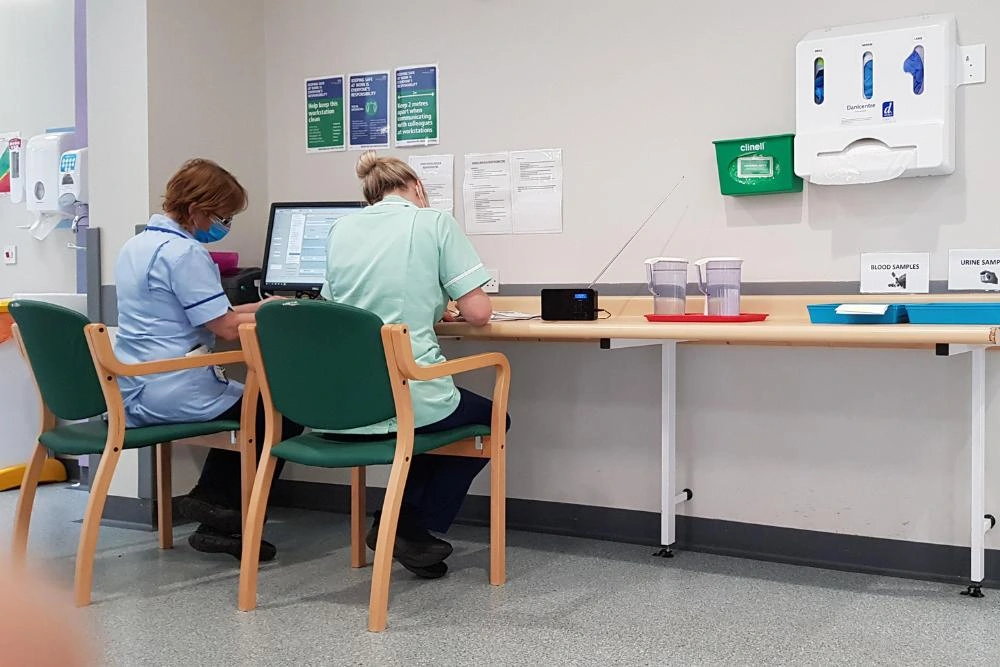
Many organisations supplying the NHS are discovering that robust carbon reporting is becoming a core requirement for future contracts. The key is to start early - measure emissions properly, build a credible reduction plan, and ensure reporting is clear and transparent.

A climate action plan is typically more comprehensive and strategic. It goes beyond compliance to include long-term decarbonisation pathways, stakeholder accountability, and integration into corporate governance.

The Carbon Sense team had the pleasure of attending the Cornwall and Isles of Scilly Sustainability Awards, and were honoured to sponsor two categories in 2025, Low Carbon Leader and Most Sustainable Organisation, and to present the trophies to three outstanding winners.

Nature-based solutions are increasingly being used by organisations to address carbon emissions. When applied carefully, they can play a meaningful role in a credible, reduction-led Net Zero strategy, particularly where unavoidable and residual emissions remain.
Developing an EPD can ensure you meet tender requirements, as well as providing an opportunity to understand and reduce the true environmental impact of your products.

Understanding the Transition from SECR to UK SRS. The UK government is replacing the current Streamlined Energy and Carbon Reporting (SECR) framework with the more comprehensive UK Sustainability Reporting Standards (UK SRS).

As part of its Net Zero Supplier Roadmap, the NHS has announced that by April 2027, all suppliers, including those providing food, medical products, and services, will be required to submit a comprehensive Carbon Reduction Plan (CRP).

Carbon Sense is your expert partner in carbon reduction. We support UK organisations to understand, measure, and reduce their carbon footprint, save energy, and make sense of sustainability. With a practical, no-nonsense approach, we help you achieve Net Zero goals while protecting your bottom line.

"We are excited to support the awards this year and are honoured to sponsor the Carbon Positive category. At this crucial time, carbon mitigation and an embedded strategy to achieve Net Zero are vital to avoid further climate change catastrophes".

In a world increasingly focused on sustainability, Carbon Literacy has emerged as an essential tool for businesses seeking to reduce their environmental impact. Carbon Sense understands the value and benefits of Carbon Literacy Training whether for a team within your business, or for your entire organisation.

A carbon reduction or decarbonisation plan is a set of strategies and actions that an organisation, community, or government implements to reduce its carbon footprint and mitigate the effects of climate change.

Carbon credits, and their differences, is a frequent topic of discussion. When developing a sustainability strategy or communicating about sustainability, its essential for businesses to understand these differences

Pathway to Net Zero, launched in November 2023 is a fully funded support programme helping businesses adopt more environmentally conscious processes and move towards becoming Net Zero.

The future still remains uncertain so considering options to reduce energy consumption to rely less on the grid is becoming more and more necessary.

Climate change has become a key issue for us all. With scientific reports being released every day, we now know more about the changes that are happening to the Earth’s systems.

The impact of the industrial revolution has created a climate where pretty much all our activities have an impact on the environment.

By reducing your organisation’s carbon footprint you can reduce your impact on the environment and resources.

There is a wealth of research being undertaken by the leading academics studying climate change and assessing how we can build climate resilience and reduce risk.

It is important to get good advice to ensure that you avoid the common pitfalls and have a plan that works for you and achieves genuine environmental benefits.