The difficulty is that conditions rarely improve - and the external environment is not waiting. Procurement requirements are tightening. NHS and public sector supply chain expectations are increasing. Funding programmes that reward early action are time-limited. The organisations that have already completed their carbon footprint are finding themselves better placed to respond. Those that haven't are increasingly having to explain why.
This article sets out the practical case for acting now - covering regulation, energy costs, funding, and what the process actually involves - drawing on the experience of organisations that have already done the work.
Procurement requirements are already in place
A Carbon Reduction Plan is a formal requirement for many central government suppliers under PPN 006. The same expectation is moving through NHS supply chains, with the Evergreen Sustainable Enterprise Standard setting out clear sustainability requirements for healthcare suppliers. Organisations without a verified carbon footprint and a credible reduction plan are increasingly at a disadvantage in tender processes - and in some cases, ineligible to bid.
The organisations that have already completed this work are ahead of the curve. The ones still waiting risk finding themselves behind when a contract renewal or tender deadline arrives.
Energy costs and carbon data are connected
Rising energy costs are a real concern for almost every organisation in the UK. What is less well understood is how directly a carbon footprint can help address them.
A carbon footprint identifies precisely where energy is being used, where it is being wasted, and what it is costing. That data informs smarter procurement decisions, highlights inefficiencies worth addressing, and provides the foundation for a reduction plan with genuine financial substance. For many organisations, the connection between understanding emissions and reducing energy expenditure is more direct than expected.
Delay has its own costs
There is a common assumption that starting later carries no penalty. In practice, delay has several consequences: missed funding rounds, procurement opportunities that require compliance documentation that isn't yet in place, and the increased difficulty of starting under pressure rather than at a time of the organisation's own choosing.
Organisations that begin the process now have time to establish a clean baseline, identify reduction opportunities, and implement changes at a manageable pace. Those that wait tend to find the process rushed - and more difficult as a result.
A carbon footprint is often framed as a compliance obligation. For the organisations that approach it thoughtfully, it becomes something more useful: a strategic asset.
A verified baseline and a credible reduction plan serve multiple purposes simultaneously. They meet procurement requirements and support tender submissions. They provide the evidence base for grant applications targeting energy efficiency and renewable generation improvements. They support ESG reporting, B-Corp certification, and ISO accreditation processes. And they give boards and leadership teams the data they need to make informed decisions about energy, operations, and supply chain management.
Several Carbon Sense clients have used their carbon footprint and reduction plan as the foundation for successful funding applications - with grant awards in some cases significantly exceeding the cost of the original carbon work. In each case, the carbon baseline was a prerequisite for eligibility, not an afterthought.
For organisations navigating funding opportunities alongside compliance requirements, having the work done early materially improves their position.
1. Establish a baseline year
The starting point is a clear, verified carbon footprint covering at minimum Scope 1 and Scope 2 emissions - direct emissions from your own operations and energy use. For organisations supplying to the public sector or NHS, relevant Scope 3 categories - including purchased goods and services, business travel, employee commuting, and waste - will also need to be included.
2. Use GHG Protocol methodology
Carbon footprints should be calculated in line with the Greenhouse Gas Protocol, the internationally recognised standard for emissions measurement. This ensures the data is credible, comparable year on year, and suitable for procurement and reporting purposes.
3. Produce a compliant Carbon Reduction Plan
A Carbon Reduction Plan documents the baseline, sets out reduction targets, and defines the actions the organisation will take to meet them. For public sector suppliers, the plan needs to meet PPN 006 requirements. For NHS suppliers, alignment with the Evergreen Framework is also relevant. The plan should be board-approved, transparent, and suitable for publication.
4. Integrate carbon management into governance
The most effective organisations treat carbon management as an ongoing operational commitment rather than a one-off exercise. Embedding it into governance, procurement decisions, and energy management means the baseline continues to be tracked and the plan remains live and actionable.
5. Consider energy procurement alongside carbon measurement
For organisations under pressure on energy costs, combining carbon measurement with a review of energy procurement can deliver practical financial benefit alongside the sustainability work. Understanding your consumption profile is the foundation for making better-informed decisions about your next energy contract.
"Most organisations that contact us have been thinking about their carbon footprint for longer than they'd like to admit. The reasons for delay are usually genuine - stretched teams, competing priorities, uncertainty about what's involved. What tends to change the conversation is when they see what the process actually looks like, and what having the data in place allows them to do. The work is more manageable than many expect. And the organisations that start now are consistently in a better position than the ones that wait." - Andrew Moss-Robinson
Carbon Sense is a UK-based carbon consultancy and certified B-Corp, supporting organisations across the private, public, and third sectors to measure, manage, and reduce their carbon emissions.
Carbon Sense supports organisations to:
The process is structured and guided. Carbon Sense manages the methodology, the calculations, and the report structure. What organisations provide is the information they already hold.
Kernow Coatings, a UK manufacturer with an established sustainability programme, worked with Carbon Sense over a six-month programme covering carbon footprinting, reduction planning, and energy management. Steve Gulliford, CEO, reflected: "We now have greater clarity over our carbon impact and a robust plan in place to manage it effectively. We would confidently recommend Carbon Sense to any organisation seeking professional, procurement-ready sustainability support."
Smile Together Dental CIC, a community interest company providing dental care across Cornwall and the Isles of Scilly, completed their Carbon Reduction Plan aligned with PPN 006 and NHS Evergreen Framework expectations. Smile Together noted: "It was hugely reassuring to have everything made clear, concise and easy to understand, particularly around PPN requirements. The work exceeded our expectations."
Get in touch with the Carbon Sense team to discuss what the process would look like for your organisation.
How much does a carbon footprint and Carbon Reduction Plan cost?
The cost of preparing a comprehensive carbon footprint and associated Carbon Reduction Plan (PPN 006 compliant) typically range from £1,500 to £2,000, depending on the size and complexity of your organisation.
It is essential to ensure that your carbon footprint is calculated using the correct methodology, organisational boundaries, emissions data, and recognised conversion factors from the outset. A well-prepared Carbon Reduction Plan provides a robust baseline against which you can accurately measure and demonstrate progress over time.
While there are lower-cost and automated options available, it is worth exercising caution. An inaccurate baseline or poorly prepared plan can create significant challenges later, including difficulties demonstrating year-on-year reductions, meeting procurement requirements, or providing credible evidence to customers and stakeholders. Investing in getting it right the first time can save considerable time, cost, and effort in the future.
What is a Carbon Reduction Plan and do I need one?
A Carbon Reduction Plan is a formal document that sets out an organisation's current carbon emissions and defines the actions it will take to reduce them over time. It is required for suppliers bidding for public sector contracts above certain thresholds under PPN 006, and is increasingly expected by NHS commissioners and other public sector buyers. Even where it is not yet a formal requirement, having one in place supports procurement credibility and demonstrates a serious approach to sustainability.
How long does it take to produce a carbon footprint?
The timeline varies depending on the size and complexity of the organisation, but the process is typically more manageable than organisations expect. Carbon Sense manages the methodology and calculations; what organisations need to provide is the information they already hold - energy bills, fuel records, travel data, and similar. For most organisations, the internal time commitment is limited to a few hours of data gathering.
What emissions scopes need to be measured?
At minimum, a credible carbon footprint should cover Scope 1 emissions (direct emissions from owned or controlled sources) and Scope 2 emissions (indirect emissions from purchased energy). For organisations supplying to the public sector or NHS, relevant Scope 3 categories - including purchased goods and services, business travel, employee commuting, and waste - will also typically need to be included.
Can a carbon footprint help with energy costs? Yes. A carbon footprint identifies where energy is being used across an organisation's operations, which provides a clear basis for identifying inefficiencies, informing energy procurement decisions, and prioritising reduction measures. Carbon Sense works with clients on both carbon measurement and energy procurement, and clients have found the combination practical and cost-effective.
What if we already have a carbon footprint from another provider?
If your organisation has previously produced a carbon footprint but has questions about its accuracy or coverage, Carbon Sense can review the existing data, re-baseline where necessary, and produce a compliant reduction plan from a verified starting point. Wildanet, a Cornish internet service provider, came to Carbon Sense in exactly this situation - and the resulting plan provided the credible foundation they needed for stakeholder reporting and funding requirements.
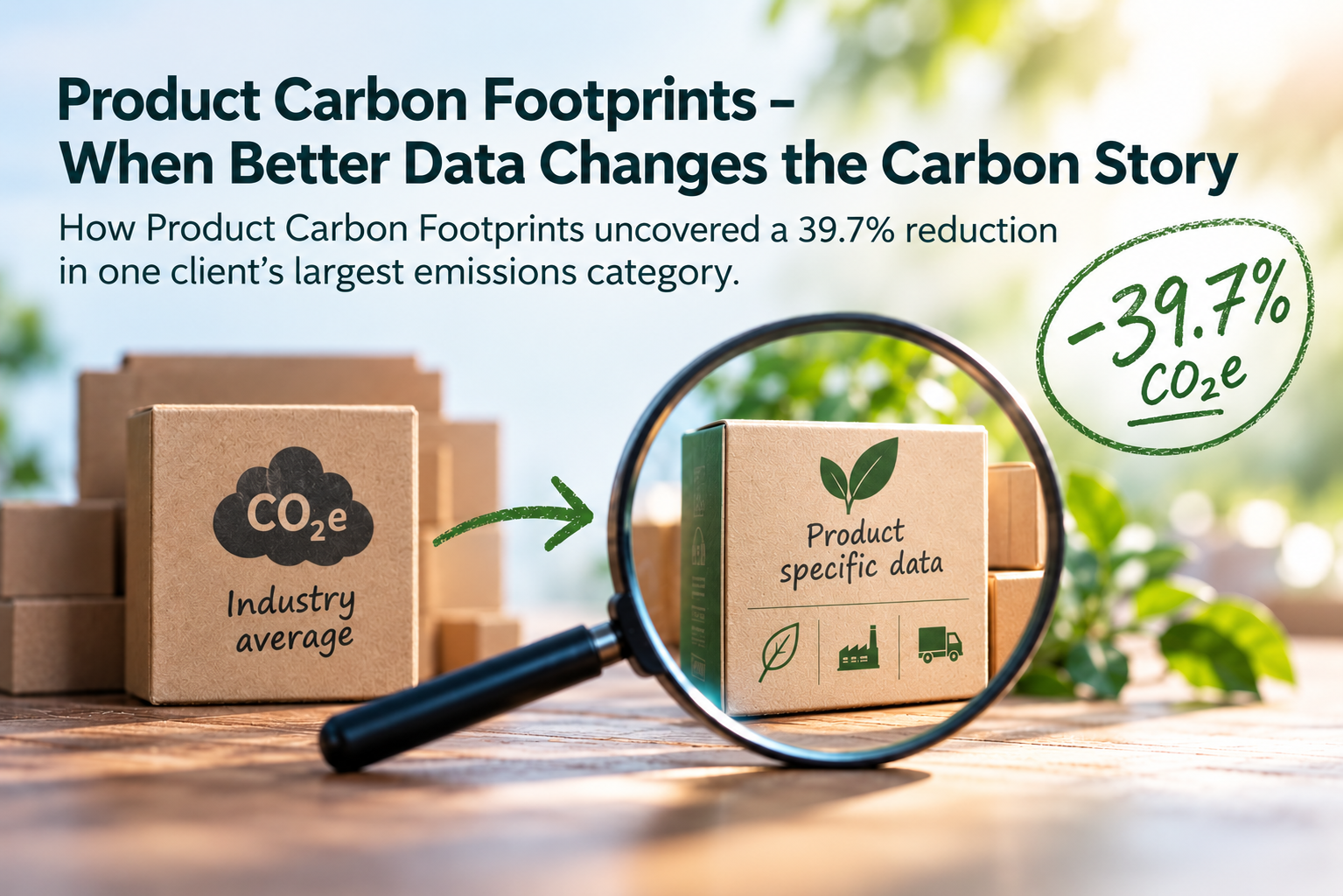
A Product Carbon Footprint can change more than a number. It can change how an organisation understands its emissions, sets its targets and makes purchasing decisions, replacing assumptions with evidence and creating a stronger foundation for genuine carbon reduction.

Digital Product Passports (DPPs) are set to change how manufacturers collect, manage and share product information. This article explains what DPPs mean for UK manufacturers supplying the EU, key implementation dates and how Product Carbon Footprints, Life Cycle Assessments and reliable supply chain data can help businesses prepare.
Across the UK, organisations are putting off their carbon footprint work. Budget pressure, competing priorities, and uncertainty about what the process involves are all cited as reasons. For many, it feels like something that can wait until conditions improve.

The UK care sector is a large and diverse part of the healthcare system, with around 15,000 residential and nursing care homes, alongside thousands of community healthcare providers, dental practices and domiciliary care services operating across the country.

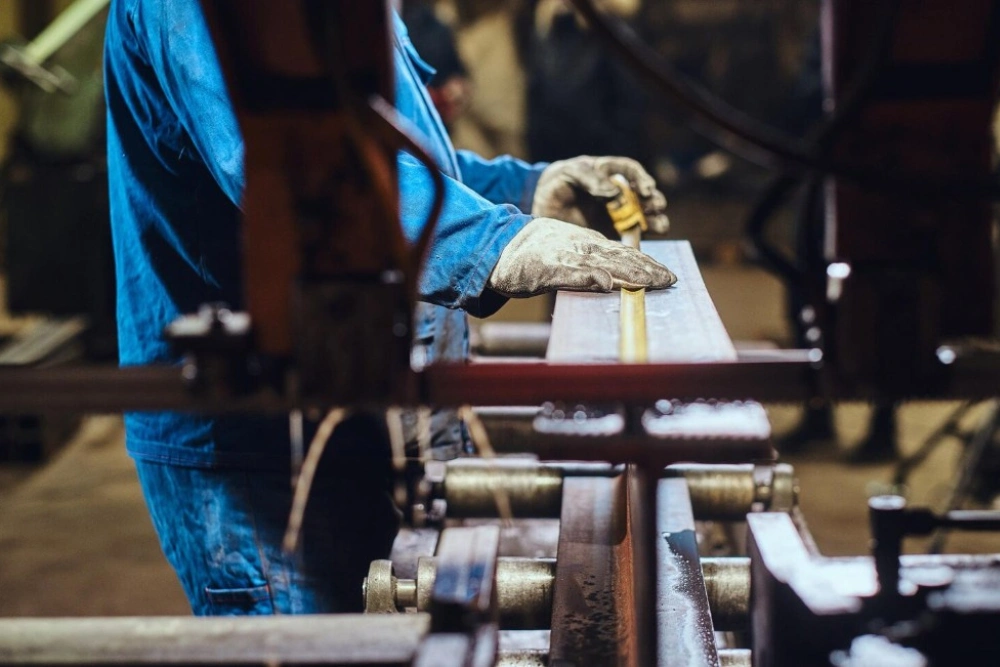
UK manufacturing accounts for approximately 11 per cent of the country's total greenhouse gas emissions. From energy-intensive processing to complex multi-material supply chains, the sector faces a carbon management challenge that is both operationally complex, and commercially urgent.
Could CBAM affect your business? Understand what the EU and UK schemes mean for your supply chain and find out how ready you are with our free 2–3 minute CBAM Readiness Assessment.

Many organisations assume that bringing a new supplier into their supply chain will automatically increase their carbon footprint. In practice, however, the opposite can sometimes be true. The right supplier, with more efficient processes, better environmental performance or lower-carbon products and services, can actually help reduce emissions across your wider value chain.

Embodied carbon is rapidly becoming one of the biggest climate challenges in construction. In this article we explore how circular building design and design for disassembly can reduce emissions from the outset, turning buildings into future material assets rather than demolition waste.

Organisations receiving Cornwall’s Good Growth or Shared Prosperity Fund support may now need Environmental Growth Action Plans or Carbon Reduction Plans. Learn what this means and how businesses can respond.
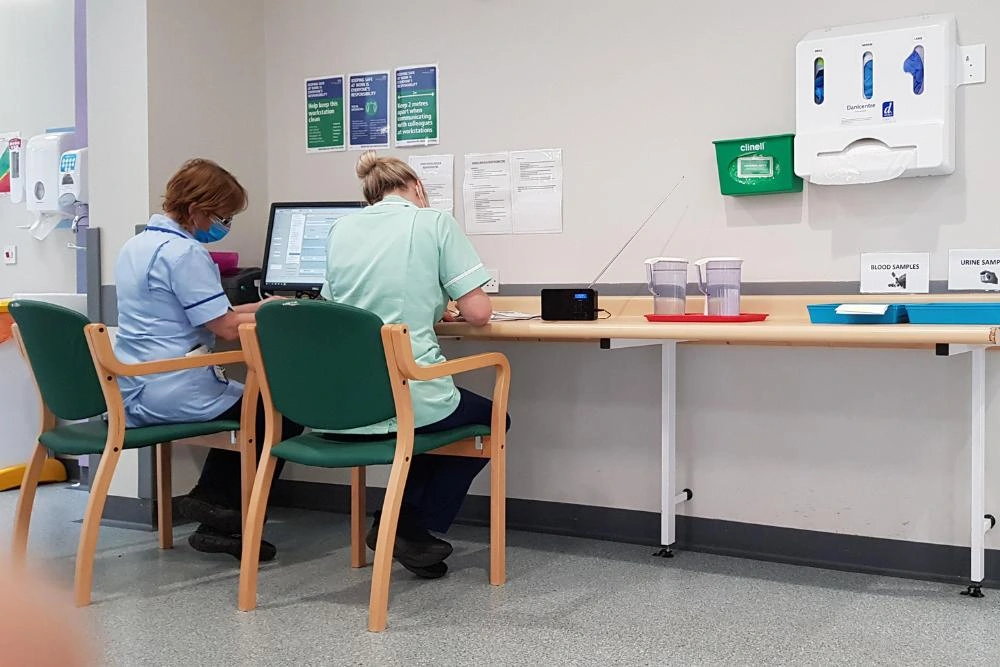
Many organisations supplying the NHS are discovering that robust carbon reporting is becoming a core requirement for future contracts. The key is to start early - measure emissions properly, build a credible reduction plan, and ensure reporting is clear and transparent.

A climate action plan is typically more comprehensive and strategic. It goes beyond compliance to include long-term decarbonisation pathways, stakeholder accountability, and integration into corporate governance.

The Carbon Sense team had the pleasure of attending the Cornwall and Isles of Scilly Sustainability Awards, and were honoured to sponsor two categories in 2025, Low Carbon Leader and Most Sustainable Organisation, and to present the trophies to three outstanding winners.

Nature-based solutions are increasingly being used by organisations to address carbon emissions. When applied carefully, they can play a meaningful role in a credible, reduction-led Net Zero strategy, particularly where unavoidable and residual emissions remain.
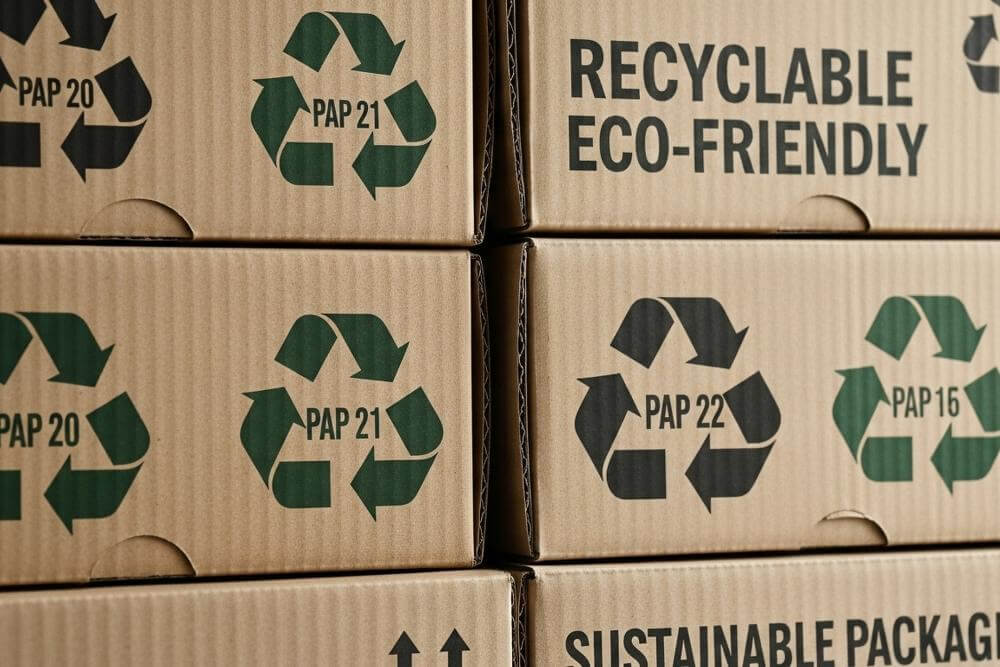
Developing an EPD can ensure you meet tender requirements, as well as providing an opportunity to understand and reduce the true environmental impact of your products.

Understanding the Transition from SECR to UK SRS. The UK government is replacing the current Streamlined Energy and Carbon Reporting (SECR) framework with the more comprehensive UK Sustainability Reporting Standards (UK SRS).

As part of its Net Zero Supplier Roadmap, the NHS has announced that by April 2027, all suppliers, including those providing food, medical products, and services, will be required to submit a comprehensive Carbon Reduction Plan (CRP).

Carbon Sense is your expert partner in carbon reduction. We support UK organisations to understand, measure, and reduce their carbon footprint, save energy, and make sense of sustainability. With a practical, no-nonsense approach, we help you achieve Net Zero goals while protecting your bottom line.

"We are excited to support the awards this year and are honoured to sponsor the Carbon Positive category. At this crucial time, carbon mitigation and an embedded strategy to achieve Net Zero are vital to avoid further climate change catastrophes".

In a world increasingly focused on sustainability, Carbon Literacy has emerged as an essential tool for businesses seeking to reduce their environmental impact. Carbon Sense understands the value and benefits of Carbon Literacy Training whether for a team within your business, or for your entire organisation.

A carbon reduction or decarbonisation plan is a set of strategies and actions that an organisation, community, or government implements to reduce its carbon footprint and mitigate the effects of climate change.

Carbon credits, and their differences, is a frequent topic of discussion. When developing a sustainability strategy or communicating about sustainability, its essential for businesses to understand these differences

Pathway to Net Zero, launched in November 2023 is a fully funded support programme helping businesses adopt more environmentally conscious processes and move towards becoming Net Zero.

The future still remains uncertain so considering options to reduce energy consumption to rely less on the grid is becoming more and more necessary.

Climate change has become a key issue for us all. With scientific reports being released every day, we now know more about the changes that are happening to the Earth’s systems.

The impact of the industrial revolution has created a climate where pretty much all our activities have an impact on the environment.

By reducing your organisation’s carbon footprint you can reduce your impact on the environment and resources.

There is a wealth of research being undertaken by the leading academics studying climate change and assessing how we can build climate resilience and reduce risk.

It is important to get good advice to ensure that you avoid the common pitfalls and have a plan that works for you and achieves genuine environmental benefits.